Browse

Log in / Register
 Share
Share
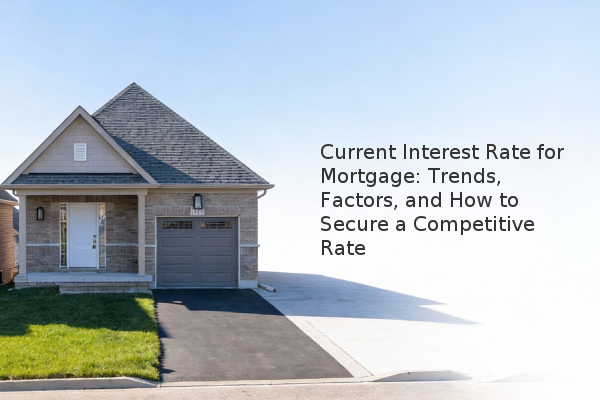
As of late 2024, the average interest rate for a 30-year fixed-rate mortgage in the United States hovers in a range that reflects a dynamic economic landscape. The current interest rate for a mortgage is not a single number but a spectrum, typically between 6.5% and 7.5% for borrowers with excellent credit, influenced heavily by the Federal Reserve's policy, inflation data, and individual financial profiles. Understanding these factors is crucial for anyone considering a home purchase or refinance, as even a slight percentage difference can translate to tens of thousands of dollars over the life of a loan. This guide provides an objective analysis of what shapes today's rates and actionable strategies for homebuyers.
The mortgage rate you are offered is a complex product of macroeconomic forces and personal financial health. The primary driver is the Federal Funds Rate, set by the Federal Reserve. While the Fed does not directly set mortgage rates, its policy influences the cost of lending for financial institutions. When the Fed raises rates to combat inflation, borrowing becomes more expensive, and mortgage rates typically rise. Conversely, rates often fall when the Fed adopts a more accommodative stance. Other key economic indicators include the 10-year Treasury yield, which serves as a benchmark for long-term borrowing, and the overall health of the economy, including employment data and inflation reports like the Consumer Price Index (CPI).
Your personal financial standing is equally critical. Lenders assess risk based on your credit score, with higher scores qualifying for the most favorable rates. They also examine your debt-to-income ratio (DTI), which is your total monthly debt payments divided by your gross monthly income. A lower DTI signals to lenders that you can comfortably manage additional debt. Furthermore, the size of your down payment plays a role; a larger down payment often results in a lower interest rate, as it reduces the lender's risk.
| Credit Score Tier | Estimated Impact on 30-Year Fixed Rate (vs. Average) |
|---|---|
| 760+ (Excellent) | -0.5% or more |
| 700-759 (Good) | Average Rate |
| 620-699 (Fair) | +0.5% to +1.0% |
| Below 620 (Poor) | May not qualify for conventional loans |
Securing a competitive mortgage rate requires proactive research and comparison. The most effective strategy is to obtain loan estimates from multiple lenders. A Loan Estimate is a standardized form that details the exact interest rate, closing costs, and other loan terms, making it easy to compare offers from banks, credit unions, and online lenders side-by-side. It is essential to request these estimates within a concentrated period (e.g., 14-45 days) to minimize the impact on your credit score, as credit bureaus typically count multiple mortgage inquiries as a single event for scoring purposes.
Another powerful tool is mortgage points, also known as discount points. This is an optional, upfront fee paid at closing to lower your interest rate for the entire loan term. One point typically costs 1% of your loan amount and might reduce your rate by 0.25%. Whether buying points makes financial sense depends on how long you plan to own the home; it's a calculation of upfront cost versus long-term savings. Based on our experience assessment, if you plan to stay in the home for longer than five to seven years, purchasing points can be a predictable way to reduce the total interest paid.
Understanding the different loan products is essential, as each carries a different interest rate structure. The most common is the fixed-rate mortgage (FRM), where the interest rate remains constant for the entire loan term, typically 15 or 30 years. This offers stability and predictable monthly payments. In contrast, an adjustable-rate mortgage (ARM) features a low, fixed introductory rate for an initial period (e.g., 5, 7, or 10 years), after which the rate adjusts periodically based on a market index. ARMs can be attractive if you plan to sell or refinance before the adjustment period begins, but they carry the risk of future payment increases.
Other government-backed loans like FHA loans (insured by the Federal Housing Administration) often have competitive rates, especially for borrowers with lower credit scores or smaller down payments. VA loans, available to veterans and active military members, frequently offer rates below conventional loans and require no down payment. Jumbo loans, which exceed the conforming loan limits set by the Federal Housing Finance Agency (FHFA), typically have higher interest rates due to the increased risk associated with larger loan amounts.
Navigating the current mortgage rate environment is about being an informed and prepared borrower. The most effective strategy is to compare personalized loan estimates from at least three different lenders to ensure you are getting a competitive offer. Improving your credit score and lowering your debt-to-income ratio before applying can significantly impact the rate you qualify for. Carefully consider the trade-offs between fixed-rate and adjustable-rate mortgages based on your financial stability and how long you intend to hold the property. Finally, always factor in both the interest rate and the associated closing costs to understand the true cost of your mortgage over time.