Browse

Log in / Register
 Share
Share
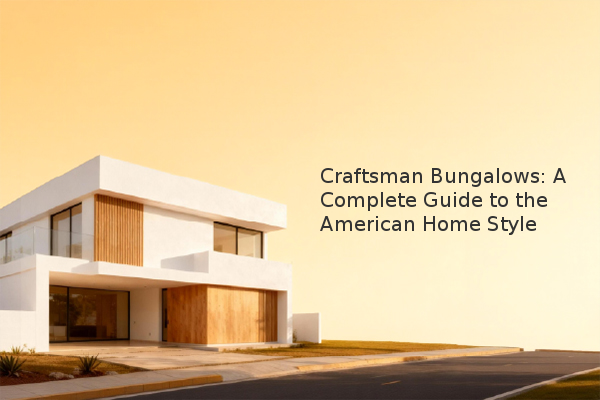
Craftsman bungalows are a quintessentially American home style, prized for their cozy yet elegant character, honest craftsmanship, and enduring architectural appeal. Built primarily between 1905 and 1930, these homes feature distinctive low-pitched roofs, wide porches, and exposed structural elements. Their popularity has surged since a 1970s revival, making them a desirable find for today's homebuyers. This guide outlines the key features, history, and what to look for when buying or maintaining a Craftsman home.
A Craftsman bungalow is a style of home that emerged from the American Arts and Crafts movement. Key exterior features make them instantly recognizable. These include low-pitched roof lines with wide, overhanging eaves. The rafters—the beams that support the roof—are often exposed underneath these eaves. A full or partial wide front porch is essential, typically supported by heavy, tapered square columns that rest on solid piers. Other hallmarks include double-hung windows, often with a distinctive pattern in the upper sash, and the use of natural materials like wood, stone, and brick.
Inside, the "honest" craftsmanship continues. You'll commonly find built-in cabinetry like bookshelves, window seats, and buffets—a signature element that maximizes space. Interiors often feature exposed beams, unpainted woodwork, and a fireplace clad in brick or stone. The floor plan is typically efficient and less formal than earlier Victorian styles, focusing on functionality.
Although uniquely American, the Craftsman aesthetic is a direct descendant of the British Arts and Crafts movement of the late 19th century. This movement was a reaction against the mass-produced, ornate goods of the Victorian era, emphasizing handcrafted quality, simplicity, and moral integrity in design. The name "Craftsman" itself comes from The Craftsman magazine, founded in 1901 by furniture maker Gustav Stickley, who championed these ideals.
The style was popularized across the United States by architects like brothers Charles and Henry Greene of Pasadena, California. Their designs, including the famous Gamble House (1908), were featured in national magazines, making the bungalow a symbol of modern, middle-class living. Ironically, their popularity led to Sears, Roebuck and Co. selling pre-cut "kit" versions, making authentic Craftsman design accessible to a broad audience.
Identifying an original Craftsman bungalow involves looking for specific architectural details that distinguish it from later revivals or similar styles. The following table outlines key characteristics to verify a home's authenticity.
| Feature | Original Craftsman (c. 1905-1930) | Modern Interpretation |
|---|---|---|
| Materials | Solid wood (often oak, maple), brick, stone. | May use composite materials or engineered wood. |
| Hardware | Period-correct, often wrought iron or simple brass. | Modern hardware; may not be era-appropriate. |
| Windows | Double-hung, often with divided lites in the upper sash. | Larger, modern single-pane windows are a replacement. |
| Layout | Efficient, practical floor plan; typically 1-1.5 stories. | May have a more open, contemporary layout. |
Craftsman bungalows often hold their value well due to high demand from buyers who appreciate their character and quality construction. Based on our experience assessment, their value is influenced by location, size, and, most critically, the condition of original features. A home with preserved built-ins, original hardwood floors, and period-appropriate windows will typically command a premium. The 2023 data from the National Association of Realtors highlights that well-maintained historic homes in desirable neighborhoods can see values 5-15% above area medians. However, extensive modernization that removes character-defining features can negatively impact value.
Preserving the architectural integrity is the most important consideration for owners. When planning renovations, prioritize repairing original features over replacing them. If replacement is necessary, source materials that match the home's era. The key is to enhance modern livability without sacrificing the charm that makes a Craftsman home special. Focus on maintaining the porch, woodwork, and built-in features, as these are the core of the home's identity and long-term value.