Browse

Log in / Register
 Share
Share
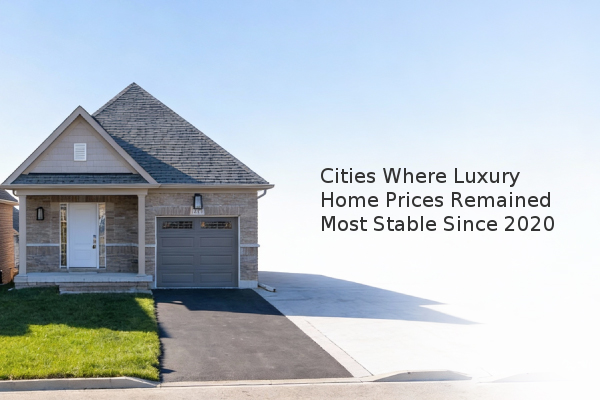
For luxury home buyers in 2026, the most significant opportunities may lie in metropolitan areas where high-end real estate prices saw the most modest growth over the past several years. Based on an analysis of listing data, the price threshold for the top 5% of homes—the metric used to define the luxury home price point—has increased by less than 25% since 2020 in several key cities, with one market even experiencing a slight decrease. This stability presents a potential relative value compared to markets where luxury prices skyrocketed by nearly 50% or more.
| City & State | Luxury Price Threshold (2020) | Luxury Price Threshold (2024) | 4-Year Increase |
|---|---|---|---|
| Washington, DC | $2,995,900+ | $2,972,500+ | -1% |
| Toledo, OH | $324,670+ | $335,700+ | 3% |
| Winston-Salem, NC | $938,888+ | $998,450+ | 6% |
| Wichita, KS | $765,000+ | $895,858+ | 17% |
| Stockton, CA | $849,003+ | $1,004,188+ | 18% |
The relative stability in these markets can be primarily attributed to shifts in demand and pre-existing economic conditions. In major coastal population centers like Washington, D.C., and Seattle, the widespread adoption of remote work—a lasting trend from the pandemic era—allowed high-income buyers to relocate, reducing pressure on the luxury segment. Furthermore, these markets were already among the most expensive in the nation, leaving less room for dramatic price growth, especially as buyers faced ongoing affordability challenges with higher mortgage rates in 2026.
The analysis reveals two distinct types of markets with stable luxury prices. The first includes dense, high-cost coastal cities where out-migration dampened demand. The second group comprises smaller and mid-sized cities, particularly in the Midwest, where home prices have historically been more affordable. In cities like Toledo, Ohio, the luxury price threshold remains below the current national median home price, offering exceptional value. These areas did not experience the same speculative investment boom, which insulated them from the wilder price fluctuations seen elsewhere.
In certain markets, the motivation of incoming buyers played a key role. For example, in Stockton, California, many buyers were seeking affordability by relocating from pricier neighboring areas like San Francisco. These buyers were predominantly looking for median-priced homes, not luxury properties. Consequently, while the median home price in Stockton rose close to 60%, the growth in the top 5% of homes was a more modest 19%. This trend highlights how demand driven by affordability seekers does not exert the same upward pressure on the high-end market.
For prospective buyers, these markets represent areas where negotiating power may be stronger compared to hotter luxury markets. However, a purchase decision should be based on a comprehensive assessment of local economic factors, property tax rates, and long-term livability. It is crucial to conduct thorough due diligence, including a professional home inspection and review of title insurance, which protects against ownership claims on the property.
The key takeaway is that luxury real estate value is highly localized. While national trends provide context, the opportunity for a favorable purchase depends on understanding the specific dynamics of a target city. Focusing on markets with historically stable growth can offer a more predictable investment path in the current real estate landscape.