Browse

Log in / Register
 Share
Share
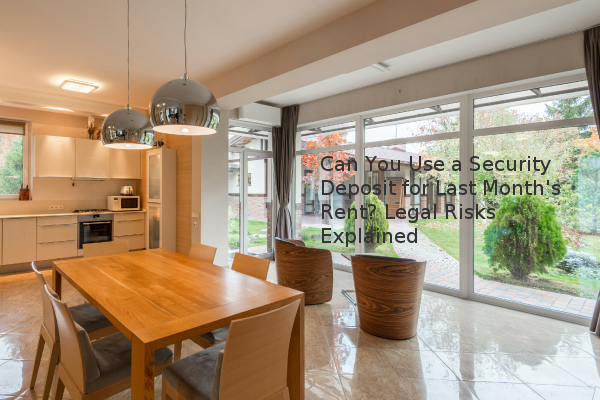
Using your security deposit to cover your final month's rent is generally not permitted and constitutes a breach of your lease agreement. While it may seem convenient, this action can lead to legal disputes, damage your relationship with the landlord, and negatively impact your credit and future rental applications. The security deposit is legally intended for repairs beyond normal wear and tear, not for unpaid rent. The safest approach is to pay your last month's rent separately and follow the proper procedures to get your security deposit refunded.
In most cases, no, it is not legal to unilaterally decide to use your security deposit for last month's rent. The fundamental reason lies in the distinct legal purposes of these two payments. A security deposit is a refundable sum of money held by the landlord to cover potential costs for damages to the property that exceed normal wear and tear, unpaid rent, or cleaning fees. Your final month's rent, however, is payment for housing services rendered.
Most standard lease agreements explicitly state that the security deposit cannot be applied to the last month's rent. As Professor David Reiss, a law expert, notes, "The landlord wants the security deposit to cover, among other things, damage to the property. If it is used for rent, it is no longer available for that primary purpose." By withholding the last month's rent, you are effectively breaking the contract, which gives the landlord grounds to take legal action against you for the unpaid rent and associated fees.
Choosing to use the deposit for rent can have several negative consequences that extend beyond your current tenancy. The immediate risk is that your landlord can sue you in small claims court for the amount of the unpaid rent. Even if you believe the apartment is in good condition, the landlord may identify damages you were not aware of.
Perhaps more damaging are the long-term effects:
The concern that prompts tenants to consider this move—fear of not getting the deposit back—is valid, but there is a correct process to ensure a refund. Landlords are legally required to return your security deposit, typically within a specific timeframe (e.g., 14-30 days after move-out, depending on state law), provided there are no justified deductions.
To maximize your chances of a full refund:
If your landlord wrongfully withholds your deposit, you have recourse. You can send a formal demand letter and, if necessary, file a claim in small claims court. The proper channel for dispute is through legal means after move-out, not by withholding the final rent payment.
Navigating the end of a lease requires careful attention to your contractual obligations. Based on our experience assessment, the risks of using a security deposit for rent far outweigh the temporary convenience. To protect your financial and rental history, always pay your last month's rent separately. The most reliable strategy is to maintain the property, document its condition upon departure, and follow state-specific procedures to secure your security deposit refund. This approach ensures a clean break from your tenancy and preserves your reputation for future housing applications.