Browse

Log in / Register
 Share

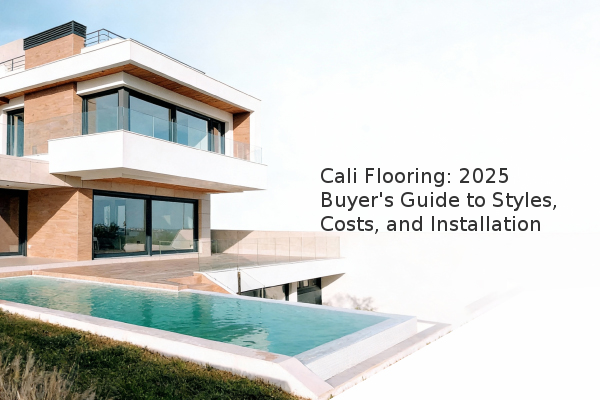
Cali Flooring has become a prominent name in the US hardwood and vinyl plank market, known for its visually appealing designs and commitment to durability. This guide provides an objective overview of Cali flooring products, including their core collections, typical costs, and key installation considerations for homeowners in 2025. The most significant takeaway is that Cali offers a range of engineered hardwood and luxury vinyl plank (LVP) designed to suit various budgets and aesthetic preferences, with proper subfloor preparation being critical for a successful installation.
Cali flooring specializes in two primary categories: engineered hardwood and luxury vinyl plank. Engineered hardwood is constructed with a real wood veneer atop a multi-layer core, offering greater stability against moisture and temperature changes than solid hardwood. Their LVP products are a type of resilient flooring, meaning it's designed to give underfoot, often featuring a rigid core for enhanced durability. Cali's main collections, such as Longboard and Vinyl Pro, are known for their realistic wood-look visuals and protective wear layers. These products are positioned as a modern alternative for homeowners seeking the aesthetic of wood with practical benefits for active households.
Selecting the appropriate Cali flooring involves assessing your home's specific conditions and your lifestyle. For moisture-prone areas like basements or bathrooms, LVP is the superior choice due to its 100% waterproof properties. For living rooms or bedrooms where you desire the authentic feel and value of real wood, engineered hardwood is ideal. Key specifications to compare include the wear layer thickness (measured in mils for LVP), the hardness rating (for engineered hardwood, often measured by the Janka scale), and the quality of the attached underlayment. A higher mil rating indicates better resistance to scratches and dents, which is crucial for homes with pets or high foot traffic.
The total investment for Cali flooring varies significantly based on the product line and project scope. On average, materials alone can range from $4.50 to $12.00 per square foot. Their more affordable LVP lines start at the lower end, while premium, thick-engineered hardwood options reach the higher end. Professional installation adds another $2.00 to $5.00 per square foot. It's essential to factor in additional costs for subfloor leveling, moisture barriers, trim, and transitions, which can add 10-20% to the total project cost. The following table provides a simplified cost breakdown for a 300-square-foot room:
| Cost Component | Low Estimate | High Estimate |
|---|---|---|
| Materials (Cali LVP - Engineered Hardwood) | $1,350 | $3,600 |
| Professional Installation | $600 | $1,500 |
| Total Estimated Cost | $1,950 | $5,100 |
Proper installation is paramount to ensuring the longevity and appearance of your floors. Both engineered hardwood and LVP require a perfectly flat and dry subfloor to prevent issues like buckling or gapping. Acclimating the planks in the room where they will be installed for 48-72 hours is a non-negotiable step. For maintenance, daily sweeping or dry mopping is recommended. When cleaning, use a damp mop with a manufacturer-approved cleaner; avoiding excessive water is critical. Placing protective pads under furniture and using area rugs in high-traffic zones will help preserve the floor's finish over time.
In summary, a successful Cali flooring project hinges on selecting the right product for your home's environment, budgeting accurately for both materials and professional installation, and adhering to strict preparation and maintenance protocols. By focusing on these verifiable factors, homeowners can make an informed decision that aligns with their practical needs and design goals for 2025.