Browse

Log in / Register
 Share
Share
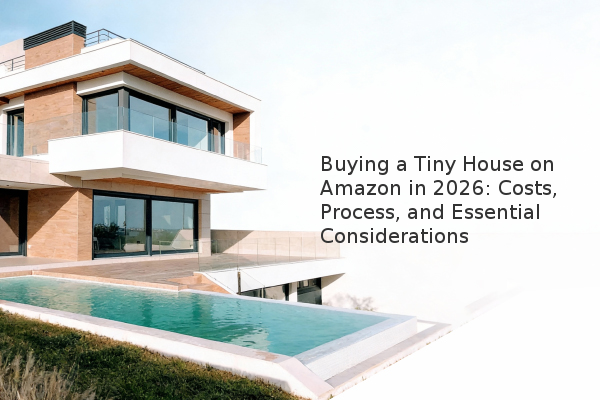
Purchasing a tiny house on Amazon is a viable path to homeownership for under $50,000, but it requires extensive due diligence on zoning, permits, and construction quality. While these prefabricated homes offer a significant discount from the U.S. median home price of $424,950, success hinges on navigating local regulations and understanding the assembly process. This approach is not for the unprepared; it demands careful planning to avoid costly legal and structural mistakes.
An Amazon tiny home is a prefabricated dwelling, often made from materials like galvanized steel, that is purchased online and delivered for self-assembly. Unlike traditional site-built homes, these structures are manufactured off-site in sections. The concept, while gaining modern traction, is historically rooted; as noted by real estate professionals, companies like Sears, Roebuck and Co. sold similar kit homes over a century ago. The primary appeal is affordability, with prices ranging from approximately $23,000 to $50,000. These homes are typically described as requiring minimal assembly—some claim to be installed in just a few hours by "unfolding" and securing pre-built sections. However, the advertised ease of assembly can be misleading without professional help, and critical components like utility connections (plumbing and electrical) may still require licensed contractors.
The listed price on Amazon is rarely the final cost. Prospective buyers must budget for additional expenses, including the purchase or lease of land, foundation pouring, utility hookups, permit fees, and potential assembly labor. For example, a home listed for $35,000 could easily double in cost once these factors are accounted for. Regarding quality, assessments vary. One review for a two-story model cited "exceptional craftsmanship," but these are individual anecdotes. Based on our experience assessment, the quality of construction is a significant variable and may not match the durability standards of a traditional home. It is crucial to research manufacturers, seek independent reviews, and, if possible, inspect a model home before purchasing.
The most substantial challenge is often legal, not financial. Zoning ordinances and building codes vary dramatically by city and county, and many areas have minimum square footage requirements that tiny homes may not meet. As advised by industry experts, checking local zoning laws is the essential first step. You must confirm that your intended property allows for the placement of a prefabricated dwelling and that you can obtain the necessary permits. Purchasing a home without this verification can result in being unable to legally place it, leading to a total loss of investment. This due diligence is non-negotiable.
An Amazon tiny home can be a good investment for specific individuals: those seeking an affordable primary residence, a vacation property, or an accessory dwelling unit (ADU) where local laws permit. It is particularly appealing to those prioritizing financial freedom over space. However, it is generally not a strong financial investment for equity building in the same way a traditional home might be. The resale market for these properties is niche, and depreciation is a real possibility. It is best viewed as a lifestyle choice that enables homeownership, rather than a primary wealth-building tool.
To successfully purchase a tiny home on Amazon, follow these key steps: First, conduct thorough research on local zoning laws and permit requirements before buying anything. Second, secure a suitable parcel of land that can legally accommodate the dwelling. Third, get detailed quotes from contractors for foundation work and utility connections to understand the true total cost. Finally, carefully vet the manufacturer and read customer reviews to assess the build quality and customer service reputation. While this path offers a route to affordable homeownership, it is fraught with complexities that require a meticulous and proactive approach.