
Browse

Log in / Register
 Share
Share
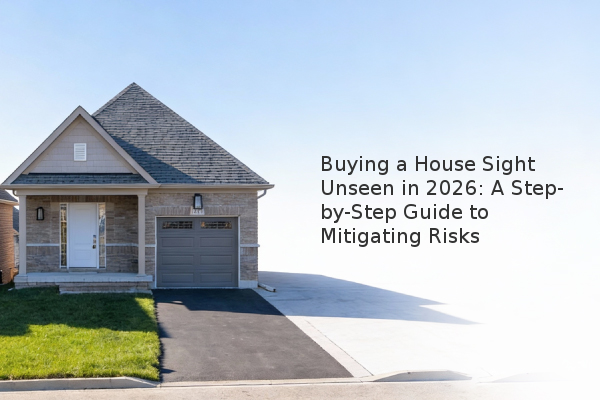
Buying a house sight unseen is a viable strategy for remote homebuyers in 2026, but it requires a meticulous, process-driven approach to mitigate risks. Success hinges on leveraging technology, hiring a expert local real estate agent, and insisting on rigorous inspections. Based on our experience assessment, avoiding common pitfalls can lead to a successful purchase, even from a distance. The key is to replace the physical walk-through with a comprehensive digital and professional verification process.
The foundation of a sight-unseen purchase is information gathering. You cannot rely on personal observation, so your comfort level will directly correlate with the quality and quantity of questions you ask. This due diligence extends beyond the property itself to the community and governing bodies.
Zach Combs, a real estate expert from Maryland, emphasizes that questioning is the primary tool for a remote buyer. You should direct queries to your real estate agent, the homeowner's association (HOA), and the seller. Create a master list covering your daily needs, work-life balance, and long-term goals. Key areas to investigate include the HOA's rules, financial health, and policies; the neighborhood's noise levels and future development plans; and the property's specific history of repairs. Compiling and getting answers to a detailed list of questions over several months is a non-negotiable step for confidence.
A knowledgeable local agent acts as your eyes, ears, and boots on the ground. Their expertise is invaluable for assessing a property's true condition and its position within the local market. They provide context that photos and videos cannot, such as neighborhood dynamics and subtle property quirks.
When vetting agents, look for those with proven experience in your target neighborhood and a strong record of client satisfaction. Review their sales history and read client testimonials. A superior local agent will not pressure you into a sale and will provide unbiased, bird's-eye view assessments of properties. Hiring a highly-rated local agent based specifically in your target city or suburb is critical for an objective evaluation.
Modern technology offers powerful tools to simulate an in-person experience. While not a perfect substitute, a strategic combination of these resources can provide a comprehensive understanding of a property's layout and condition.
Essential technologies include:
At a minimum, you should always conduct a live video chat tour. Leveraging every available technological tool is essential to compensate for your physical absence.
Understanding spatial relationships is difficult through photos alone. A floor plan—a scaled diagram showing the arrangement of rooms—is crucial for determining if your lifestyle and belongings will fit. Without it, you risk purchasing a home that is functionally unsuitable for your needs.
If a floor plan is not available in the listing, request that your agent measure the rooms to create a basic layout. You can then use free online tools like Floorplanner.com to digitally arrange your furniture. This process eliminates guesswork. For one buyer, having precise measurements was vital for coordinating furniture delivery, ensuring large items would fit through doorways and into rooms. Demanding a accurate floor plan, or having one created, is a key step in visualizing your life in the space.
When you cannot conduct a final walk-through, professional assessments become your primary risk-mitigation strategy. Two reports are indispensable: the home inspection and the appraisal.
| Assessment | Purpose | Typically Required For |
|---|---|---|
| Home Inspection | Identifies needed repairs and the property's overall condition. | All buyers, regardless of financing. |
| Appraisal | Determines the property's fair market value for the lender. | Buyers using a mortgage loan. |
A home inspection is a thorough examination of a property's structure and systems, from the foundation to the roof. It reveals necessary repairs, allowing you to negotiate with the seller or budget for future costs. An appraisal is a professional assessment of a property's market value, which a mortgage lender requires to ensure the loan amount is appropriate. Additionally, have an insurance broker review the property's insurance requirements and the HOA's master policy. Ordering a professional home inspection is essential to understand the true condition of a sight-unseen property.
Buying a house without visiting is a structured process that prioritizes verification over assumption. By following these steps, you can significantly reduce the inherent risks. The entire process depends on building a team of local experts and using every tool at your disposal to make an informed decision.


