Browse

Log in / Register
 Share

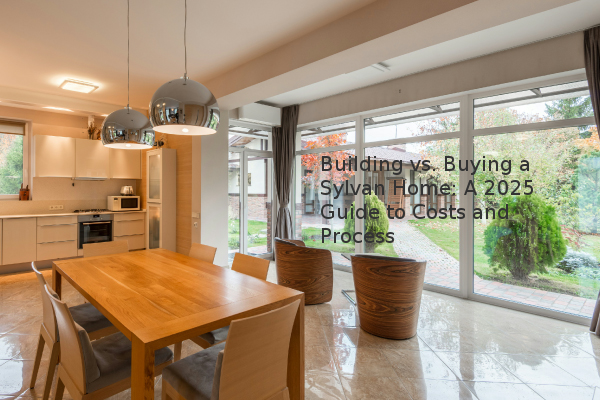
For prospective homeowners, the decision between building a new Sylvan Home from the ground up or purchasing an existing spec home primarily hinges on timeline, budget, and the desire for customization. Building a Sylvan Home offers a high degree of personalization but requires a longer timeline and more complex decision-making, while buying a move-in-ready spec home provides speed and often a lower initial price point. This guide breaks down the key differences to help you assess the best path for your situation.
Sylvan Homes typically operates on a build-to-suit model, where you select a lot and a floor plan, which can then be customized. The process begins with lot selection and securing financing. Once under contract, Sylvan Homes will guide you through selecting structural options and design center finishes. The construction phase follows, culminating in a final walk-through and closing. This entire process can take anywhere from six to twelve months, depending on lot availability, weather, and supply chain factors. It's a project management-intensive endeavor that requires patience.
Key stages include:
A spec home (short for "speculative home") is a property a builder constructs without a specific buyer, intending to sell it upon completion. For buyers, this option presents significant advantages. The most notable is the drastically reduced timeline; you can often close within 30-45 days. Furthermore, what you see is exactly what you get, eliminating uncertainty about the final product. Builders like Sylvan may also offer incentives on spec homes to ensure a quick sale, which can translate into savings on upgrades or closing costs.
The primary benefits are:
The financial comparison is not always straightforward. While building a new Sylvan Home allows you to control costs by selecting your finishes, the base price often does not include lot premiums, landscaping, or window treatments. Conversely, a spec home's price is all-inclusive. It's crucial to compare the total cost of a custom-built home, including lot premium and inevitable upgrade choices, against the final sale price of a similar spec home. Often, the spec home can be more cost-effective as the builder absorbs the carrying costs.
| Cost Factor | Building a Custom Sylvan Home | Buying a Sylvan Spec Home |
|---|---|---|
| Base Price | Set by chosen floor plan | Set by the builder, often negotiable |
| Lot Premium | Additional cost for desirable locations | Included in the final sale price |
| Design Upgrades | Added cost for each selection | Included if already installed; may be an incentive |
| Closing Costs | Standard for a new construction loan | Builder may offer contributions as an incentive |
Your decision should be based on a clear assessment of your priorities. If having a unique home tailored to your specific lifestyle is paramount and you have the flexibility of time, building is a compelling choice. However, if you need to relocate quickly due to a job change or are working with a strict budget where unforeseen costs are a concern, a spec home is the more pragmatic route. Always get pre-approved for a mortgage before seriously engaging with a builder, as this determines your actual budget and strengthens your position as a serious buyer.
Conduct thorough research on the specific Sylvan Homes community you are considering. Review the covenants, conditions, and restrictions (CC&Rs) to understand any rules governing home appearance, fencing, or landscaping. Drive through the neighborhood at different times to assess traffic, noise, and the overall feel of the community. This due diligence is critical whether you are building or buying.
Ultimately, the choice between building and buying a Sylvan Home is a balance of personal preference, timeline, and financial flexibility. By understanding the distinct processes, costs, and advantages of each path, you can make an informed decision that aligns with your homeownership goals. Focus on your must-haves versus nice-to-haves, secure financing early, and thoroughly review all community guidelines before committing.