Browse

Log in / Register
 Share
Share
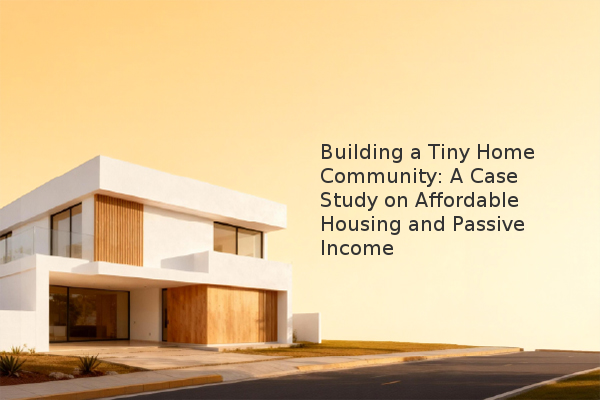
Creating a tiny home community can provide affordable housing solutions and generate passive income, as demonstrated by a successful project in Texas. By investing approximately $185,000 in land acquisition and development, founder Robyn Yerian established a community that now generates $5,400 monthly from lot rentals. This model highlights the financial viability and social benefits of intentional community development.
What is the financial blueprint for developing a tiny home community?
The initial investment for the 5-acre Texas property included a $35,000 land purchase. Development costs totaled approximately $150,000, covering essential infrastructure. This included installing a septic system, electrical hookups, water access, land excavation, and road paving. The project was structured by creating 14 individual concrete pads, each measuring 10-by-30 feet. Rented at $450 per month per pad, the project achieves a steady income stream after the upfront capital expenditure. This financial model demonstrates how using retirement funds, like a 401(k), can be invested in real estate development to create long-term, passive income.
How do zoning and regulations impact tiny home community development?
One of the most significant hurdles was navigating local zoning laws. The property was ultimately zoned as an R.V. park, a classification that can be more attainable for tiny home developments in some municipalities. Zoning refers to local laws that dictate how land can be used. Securing the correct zoning was the most challenging part of the process, as many counties have restrictions against R.V. parks or similar high-density residential setups. This underscores the importance of thorough due diligence on local regulations before purchasing land for such a project.
What are the benefits of an intentional community model for residents?
The community, exclusively for women, fosters a strong support network that significantly enhances residents' quality of life. Benefits include shared responsibilities like transportation to appointments and meal preparation in a common outdoor kitchen. This model promotes financial independence by drastically reducing individual housing costs, which is particularly impactful for women on fixed retirement incomes. The low cost of living provides a safety net and empowers residents with greater economic freedom. Based on our experience assessment, the social cohesion acts as a form of mutual aid, increasing overall well-being.
What practical advice can others learn from this community's success?
For individuals considering a similar venture, several key factors contributed to this project's success. First, selecting affordable, unincorporated land outside major metropolitan areas can keep initial costs manageable. Second, prospective developers should prepare for a rigorous zoning approval process and explore alternative classifications like R.V. parks. Finally, prioritizing resident compatibility through in-person meetings ensures a cohesive community, which is vital for long-term stability. The founder’s approach of hosting workshops to teach maintenance skills, like using power tools, also fosters self-reliance among residents.
This case study demonstrates that with careful planning and a clear vision, developing a tiny home community can be a viable path to creating affordable housing and generating predictable rental income. While not a get-rich-quick scheme, it offers a sustainable financial cushion and the invaluable benefit of building a supportive neighborhood.