Browse

Log in / Register
 Share
Share
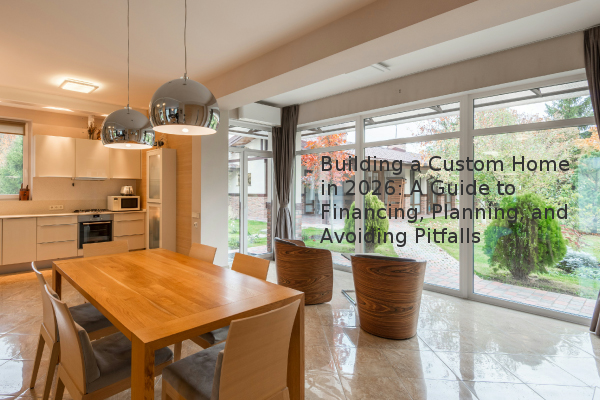
Building a custom home allows you to create a living space tailored to your unique vision, whether it includes a dedicated dance studio or a personal game room. However, the process is complex and requires meticulous planning. Based on our experience assessment, the core to a successful project lies in three areas: securing specialized financing, assembling a qualified team, and meticulous pre-construction planning to avoid costly delays. Understanding the construction loan process and having a detailed plan before breaking ground are the most critical steps for a smooth build.
Financing a custom home is fundamentally different from a standard mortgage. Instead of a single loan, you will typically need a construction loan, a short-term financing product used to cover the building costs. Unlike buying an existing home, where the property serves as immediate collateral, a construction loan is considered higher risk by lenders.
To qualify, you generally need excellent credit and a down payment of 20% to 25%. Lenders also often require proof of significant cash reserves to cover unexpected issues that may extend the construction timeline. It's common to have two closings: one for the construction loan and a second to convert it into a permanent mortgage upon completion, each involving settlement fees. If you don’t already own the land, its purchase price will need to be financed as well. Securing appropriate insurance for the construction period is also an essential, often overlooked, step.
| Loan Aspect | Custom Home Construction Loan | Traditional Mortgage |
|---|---|---|
| Collateral | Project plans & land | Completed property |
| Down Payment | Typically 20-25% | Can be as low as 3-5% |
| Payout Structure | Funds released in stages | Lump sum at closing |
| Duration | Short-term (converts to mortgage) | Long-term (15-30 years) |
The selection of your architect and builder is the most important decision you will make. Some homeowners hire an architect first to design the home and then select a builder, while others choose a builder who then recommends an architect. A third option is a design-build firm that manages the entire project from conception to completion.
No matter which path you take, checking references and reviewing portfolios of completed work is non-negotiable. Interview multiple candidates and, if possible, visit homes they have built to assess the quality of construction firsthand. This due diligence ensures your partners have the experience and style alignment necessary to execute your vision. The working relationship between the architect and builder is also crucial for a seamless process.
Your home's design must be compatible with the land it will sit on. If you already own a lot, potential builders and architects should visit the site to discuss topography, drainage, sun exposure, and utility placement. If you need to find land, some builders can assist or refer you to a real estate professional.
A crucial step is having your builder conduct a site assessment to determine the cost and scope of pre-construction work, such as installing a septic system, bringing in utilities, or building a driveway. Failing to properly integrate the design with the land can lead to massive cost overruns or a home that doesn't fit the site, necessitating costly redesigns after you've already purchased the property.
Even if you plan to live in your custom home forever, circumstances change. To protect your investment, consider the home’s future resale value. This means ensuring the size, style, and price point of your home are generally in line with other properties in the neighborhood.
Building a home that is significantly larger or more expensive than surrounding properties can make it difficult to sell later. While the home is for you, making thoughtful design choices that have broad appeal, while reserving truly unique elements for easily changeable interior spaces, is a wise long-term strategy.
The most effective way to avoid delays and going over budget is to make nearly all decisions before construction begins. This includes selecting all materials, fixtures, and appliances. A detailed plan minimizes the risk of supply chain delays and eliminates the need for expensive change orders—modifications made after work has started, which often involve ri out completed work.
Hiring a qualified team and committing to exhaustive pre-planning are the best predictors of a project that stays on schedule and on budget. While building a custom home will always have challenges, a proactive approach can make the experience far more manageable.
In conclusion, a successful custom home build hinges on secure financing, a vetted professional team, and a comprehensive plan that integrates design with the land. By focusing on these key areas, you can transform your unique vision into a reality while minimizing financial and logistical risks.