Browse

Log in / Register
 Share
Share
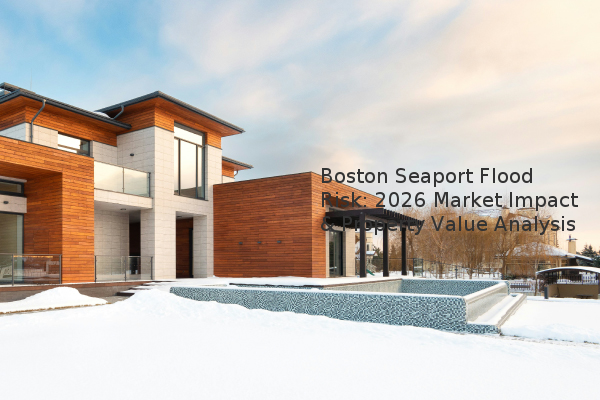
Over 99% of the real estate developed in Boston's Seaport District over the past 25 years faces significant flood risk by 2050, according to a 2026 analysis by the Metropolitan Area Planning Council (MAPC). While this has introduced a new layer of consideration for buyers, the luxury market is demonstrating resilience, with demand remaining strong for properties that incorporate advanced flood mitigation features. The key for buyers and investors is a shift towards informed decision-making, focusing on property-specific resilience measures and understanding the long-term implications of flood insurance. This analysis examines the current market dynamics, the evolving conversation around risk, and the adaptive measures shaping one of Boston's most valuable neighborhoods.
The Seaport District’s vulnerability stems from its geography; it was built on filled-in mud flats situated just barely above sea level. A recent MAPC study concluded that nearly all modern development in the area is at risk. The primary concern is not necessarily the buildings themselves, many of which are newly constructed to modern codes, but the critical infrastructure connecting them—roads, tunnels, and utilities. This infrastructure supports nearly $20 billion worth of real estate lining the waterfront. The challenge is compounded by findings that federal FEMA (Federal Emergency Management Agency) flood maps, which are used to determine insurance requirements, have historically underestimated the risk, with past disaster claims originating overwhelmingly from outside designated flood zones.
Awareness of climate risk has become a standard part of real estate conversations in the Seaport. Based on our experience assessment, buyers are increasingly proactive, seeking transparency about a property's flood history and resilience features. This has not crushed demand but has refined it. Properties that combine prime location with thoughtful design—such as elevated foundations, enhanced drainage systems, and waterproof materials—are maintaining strong value. While the median listing price in the South Boston Waterfront neighborhood has seen fluctuations, the long-term trend shows significant appreciation. This indicates that buyers are weighing the lifestyle benefits of waterfront living against manageable risks, viewing features like flood insurance as part of a comprehensive investment strategy rather than a deal-breaker.
The response to flood risk is multi-faceted. On a policy level, recommendations include requiring sellers to disclose past flood events and expanding public access to insurance claims data. For developers, the focus is on integrating resilience directly into new projects. Innovations in construction, such as smart landscaping that absorbs stormwater and the use of flood-resistant building materials, are becoming standard in luxury developments. These features provide buyers with confidence that their investment is protected. Furthermore, ongoing city investments in stormwater infrastructure and hazard mitigation programs are crucial for safeguarding the area's long-term viability and protecting its substantial contribution to Boston's tax base.
The Seaport generates a disproportionate amount of property tax revenue for the city, funding essential services from public works to schools. Any significant devaluation of properties or repeated infrastructure damage from flooding could indeed have city-wide budgetary consequences. The economic impact would ripple beyond the immediate waterfront. However, the current market adaptation suggests a path forward. The sustained demand for resilient properties helps preserve the tax base, and continued public and private investment in mitigation is viewed as a critical component of the neighborhood's future. The situation underscores the importance of collaborative planning between developers, city officials, and buyers to ensure the area's prosperity.
In conclusion, navigating the Boston Seaport real estate market in 2026 requires a focus on resilience and information. Prospective buyers should prioritize properties with documented flood mitigation features, carefully review any available flood history disclosures, and factor flood insurance into their long-term financial planning. The market is evolving to meet this challenge, and an informed approach is the best strategy for investing in this dynamic and desirable neighborhood.