Browse

Log in / Register
 Share

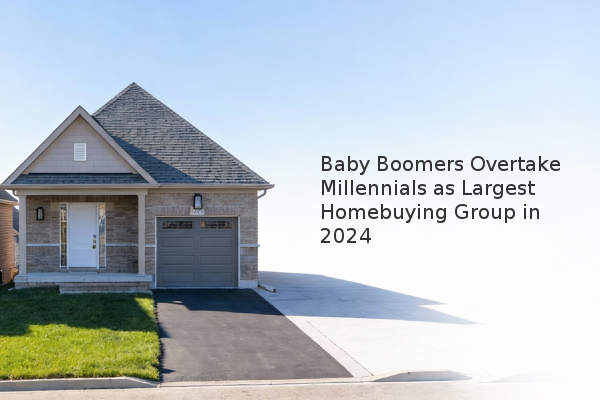
Baby boomers have reclaimed their position as the dominant force in the U.S. housing market, accounting for 42% of all homebuyers in 2024, according to the National Association of Realtors® (NAR). This shift unseats millennials, whose share of home purchases fell to 29%, a significant drop from 38% the previous year. The change is largely attributed to rising mortgage rates and the financial advantage boomers hold through substantial home equity, which provides larger down payments and reduces the impact of high borrowing costs.
The primary reason for baby boomers' market dominance is their financial positioning. Many in this demographic are repeat buyers who can leverage the equity from the sale of a previous home. Home equity is the difference between a home's current market value and the outstanding balance of all liens, such as a mortgage. This equity can be converted into a large down payment for a new property.
"Older buyers are more likely to have home equity that they can convert into a down payment," explains a senior economist. "With higher down payments, they can finance less of their purchase at these high mortgage rates." This financial buffer is critical when the average 30-year fixed mortgage rate is near 6.65% and the median home price is $412,000. In contrast, many millennials and first-time buyers rely solely on savings, making it difficult to compete.
While millennials represent a smaller portion of the overall buyer pool, they continue to dominate one key segment: first-time homebuyers. In 2024, 71% of younger millennials (aged 26-34) were purchasing a home for the first time. This highlights the persistent desire for homeownership among younger adults, even as they face significant financial headwinds. For these buyers, the path to ownership often requires more extensive saving and potentially exploring different markets or property types.
The generational divide is also evident in housing preferences. The most common purchase across all age groups was a detached single-family home, making up 75% of all sales. However, older buyers showed a distinct preference for low-maintenance options.
The 2024 market dynamics offer clear lessons for prospective buyers. The ability to leverage existing home equity provides a substantial advantage in a high-rate environment. For those without it, patience and strategic planning are essential.
The median expected tenure in a home remained 15 years for all buyers. However, younger baby boomers (60-69) planned to stay the longest (20 years), often moving to small towns. In contrast, Gen Z and younger millennials anticipated staying for only 10 years, reflecting their life stage and potential for future mobility.