Browse

Log in / Register
 Share
Share
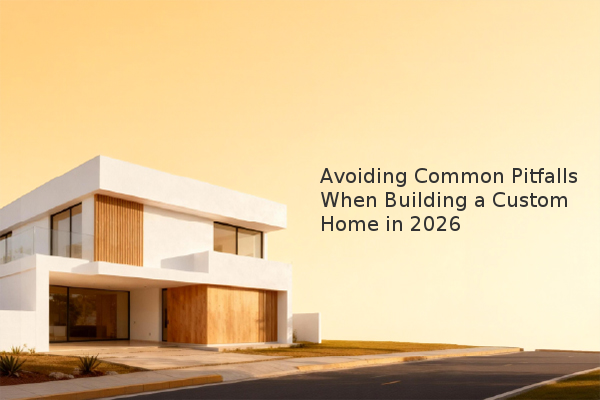
Building a custom home is a significant undertaking, and avoiding common planning and financial errors is crucial for a successful project. Based on our experience assessment, the most frequent mistakes involve inadequate preparation, budget mismanagement, and unrealistic timelines. By understanding these pitfalls upfront, you can navigate the custom home building process more effectively, ensuring the final result aligns with your vision and financial plan.
What is the biggest mistake in communicating your vision to a builder? The most significant error is expecting the homebuilder to provide all the creative ideas. Homebuilders follow your direction; they are executors, not designers. If you arrive without a clear vision, you may end up with a house that feels generic. To avoid this, come prepared with inspiration. Collect photos from magazines or online portfolios that reflect your desired style and features. Presenting these visual aids to your builder at the outset provides a concrete foundation for your custom home's design and ensures your personal tastes are accurately incorporated from the beginning.
How can you manage the overwhelming number of decisions required? The sheer volume of choices, from major layout decisions to minor fixture selections, can lead to decision paralysis. A practical strategy is to compartmentalize the decision-making process. You can request that your builder sets up a dedicated online portal where decisions are organized by room and construction phase. If a digital system isn't available, create a physical binder with your architect. This step-by-step approach prevents you from facing all choices simultaneously, making the process more manageable and less stressful, and helps keep the project moving forward steadily.
Why should you consider built-in furniture during the design phase? A major advantage of building new is the opportunity to integrate custom cabinetry and shelving directly into the home's structure. Built-in furniture, such as bookshelves or entertainment centers, often provides a more seamless and space-efficient solution than freestanding pieces. Contrary to common assumption, the cost of built-ins is frequently comparable to high-quality retail furniture, especially when factored into the initial construction loan. Discussing these options with your architect early in the design phase allows you to roll the cost into your mortgage at a lower interest rate, rather than financing them separately later with a credit card.
What is a key financial strategy for a construction loan? Many buyers overlook the full potential of a construction-to-permanent loan. This type of financing covers the building phase and then converts to a standard mortgage. The critical advantage is that you can include almost all major fixtures and appliances in the loan. Items like a high-efficiency water heater, premium kitchen appliances, or energy-saving solar panels can be financed at the mortgage's interest rate, which is typically around 4-5%. Paying for these items separately with a credit card after construction would accrue interest at a much higher rate, often exceeding 18%, significantly increasing the long-term cost.
How do you manage budget changes during construction? It is common for homeowners to make changes or upgrades as the project evolves, which can cause the budget to spiral. To maintain financial control, for every cost-adding change, identify a corresponding cost reduction elsewhere. For instance, if you decide to upgrade to a premium refrigerator, you might offset that expense by postponing the construction of a deck. This practice of "adding and subtracting" helps ensure that your project remains within a manageable financial framework, preventing unexpected financial strain.
Why is it essential to plan for construction delays? Unforeseen delays due to weather, material shortages, or scheduling conflicts are almost inevitable in custom home building. Treating the builder's initial completion date as absolute can lead to significant inconvenience. Always have a contingency plan, such as a short-term rental or extended current housing arrangement. A realistic approach involves adding a buffer of several weeks or even months to the projected timeline. This proactive planning mitigates stress and provides flexibility when the inevitable "hiccups" occur during the construction process.
Building a custom home requires meticulous planning and financial foresight. The key to success lies in preparing a clear vision, managing decisions methodically, and leveraging your construction loan effectively. By anticipating delays and implementing a balanced approach to budget changes, you can navigate the complexities of the process. Ultimately, careful planning transforms the challenge of building from the ground up into a rewarding achievement.