Browse

Log in / Register
 Share

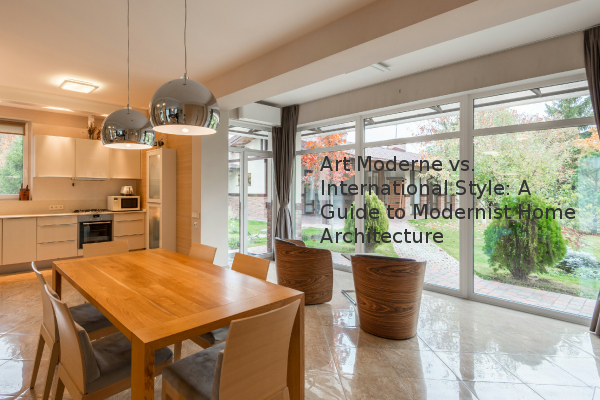
Understanding the distinct characteristics of Art Moderne and International Style homes is essential for architecture enthusiasts and potential homebuyers. While both are seminal Modernist movements that emerged in the early 20th century, they offer different aesthetic experiences and structural philosophies. This guide breaks down their origins, key features, and how to identify them, providing a clear framework for appreciation and evaluation.
What are the Key Differences Between Art Moderne and International Style? The primary distinction lies in their form and inspiration. Art Moderne (also known as Streamline Moderne) embraces curves, horizontal lines, and nautical references, suggesting speed and motion. In contrast, the International Style is characterized by its severe rectilinear forms, stark visual weightlessness, and a complete absence of ornamentation. Think of Art Moderne as a sleek, flowing streamliner train, while the International Style is a precise, functional glass box. Both styles utilize modern materials like glass, steel, and reinforced concrete but apply them to achieve different visual goals.
What Defines the Look of an Art Moderne Home? Art Moderne homes are instantly recognizable by their futuristic, streamlined appearance. Key features include:
This style reflected a sense of optimism, drawing inspiration from high-speed transportation like airplanes and ocean liners. The layout often features open plans where rooms flow into one another without doors, enhancing the feeling of spaciousness.
How Can You Identify an International Style House? The International Style is defined by its radical adherence to function and structure. Its hallmarks are:
This style, which gained prominence in the U.S. after a famous 1932 Museum of Modern Art exhibition, aimed to create a universal architectural language for the machine age.
Which Style is More Prevalent in Today's Real Estate Market? Based on our experience assessment, genuine examples of both styles are relatively rare, making them unique finds. However, the influence of the International Style is far more pervasive, forming the basis for much of the contemporary architecture and commercial real estate developed throughout the mid-20th century. Art Moderne houses are more commonly found as cherished historical properties in specific regions. When considering such a property, a specialized inspection is crucial to assess the condition of unique features like glass block walls or flat roof systems, as maintenance can require specialized knowledge.
Conclusion When evaluating these architectural gems, focus on their core principles. Art Moderne is about dynamic curvature and flow, while the International Style prioritizes stark, functional geometry. Both represent a dramatic break from traditional architecture and offer a unique living experience. For a potential buyer, appreciating the purity of these designs is key, along with a practical understanding of maintaining their specific, often innovative, construction features.