Browse

Log in / Register
 Share

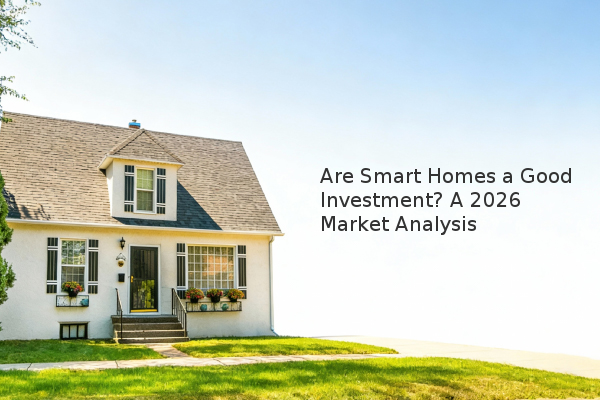
The decision to purchase a smart home involves weighing its technological benefits against its potential for appreciation, with current market data suggesting that high-tech features do not always guarantee a strong return on investment. A detailed analysis of a specific property reveals that an over-reliance on smart home amenities can lead to a listing price that significantly outpaces the local market's average price per square foot, potentially resulting in extended time on the market. For buyers in 2026, understanding this balance is critical for making a sound financial decision.
The core financial challenge of a premium smart home is its valuation relative to the local market. Price per square foot is a standard metric used by appraisers and real estate agents to compare property values within a specific area. In the case of a well-publicized smart home in North Carolina, the asking price translated to $471 per square foot, while the local area's average was just $276. This substantial premium, intended to cover the cost of high-tech features and luxury furnishings, created a significant barrier for potential buyers. Despite six price reductions, the property remained on the market, indicating that the market did not perceive the smart features as adding enough value to justify the premium. This suggests that buyers should be cautious of properties priced significantly above their area's average price per square foot, even when they include advanced technology.
| Metric | Subject Smart Home | Local Area Average |
|---|---|---|
| Price per Square Foot | $471 | $276 |
| Listing History | Multiple price reductions | N/A |
| Market Response | Extended time on market | N/A |
While features like voice-activated lighting, integrated security systems, and automated entertainment centers are attractive, their impact on resale value is not always positive. These systems often involve proprietary technology that can become obsolete or require specialized maintenance. A new buyer may not share the previous owner's enthusiasm for a specific ecosystem and might view the technology as a potential future expense rather than a benefit. Furthermore, the value of smart home technology is largely subjective; one buyer may see great value in a music-playing shower, while another may consider it an unnecessary complication. Based on our experience assessment, universally appealing upgrades like kitchen renovations or added square footage typically offer a more reliable return than highly customized smart technology.
In the 2026 real estate market, buyers are advised to prioritize fundamentals over flashy extras. A property's location, school district, structural integrity, and square footage are the primary drivers of long-term value. Smart home features should be considered a bonus, not a primary reason for purchase. Before committing to a premium for technology, conduct a comparative market analysis (CMA) with your real estate agent to see how the home's base price (without the tech) compares to similar properties. This helps determine if you are overpaying for features that may not appeal to the next buyer. It is also wise to inquire about warranties, service contracts, and the compatibility of the home's systems with mainstream smart home platforms to avoid future compatibility issues.
Conclusion The allure of a fully integrated smart home is undeniable, but a prudent investment requires a focus on market fundamentals. The key takeaway is to evaluate the property's value based on traditional metrics first, treating smart technology as a secondary factor. A home that is priced appropriately for its location and size, with smart features as an added benefit, represents a much smarter buy than a property relying on technology to justify a premium price. Always base your offer on solid comparable sales data to ensure your investment is sound.