Browse

Log in / Register
 Share
Share
So, you've stumbled upon a 1974 half dollar. Maybe it was tucked away in grandma's attic, or perhaps it jingled out of your pocket. The burning question: are 1974 half dollar coins worth anything beyond their face value? Let's dive into the fascinating world of coin collecting to find out!
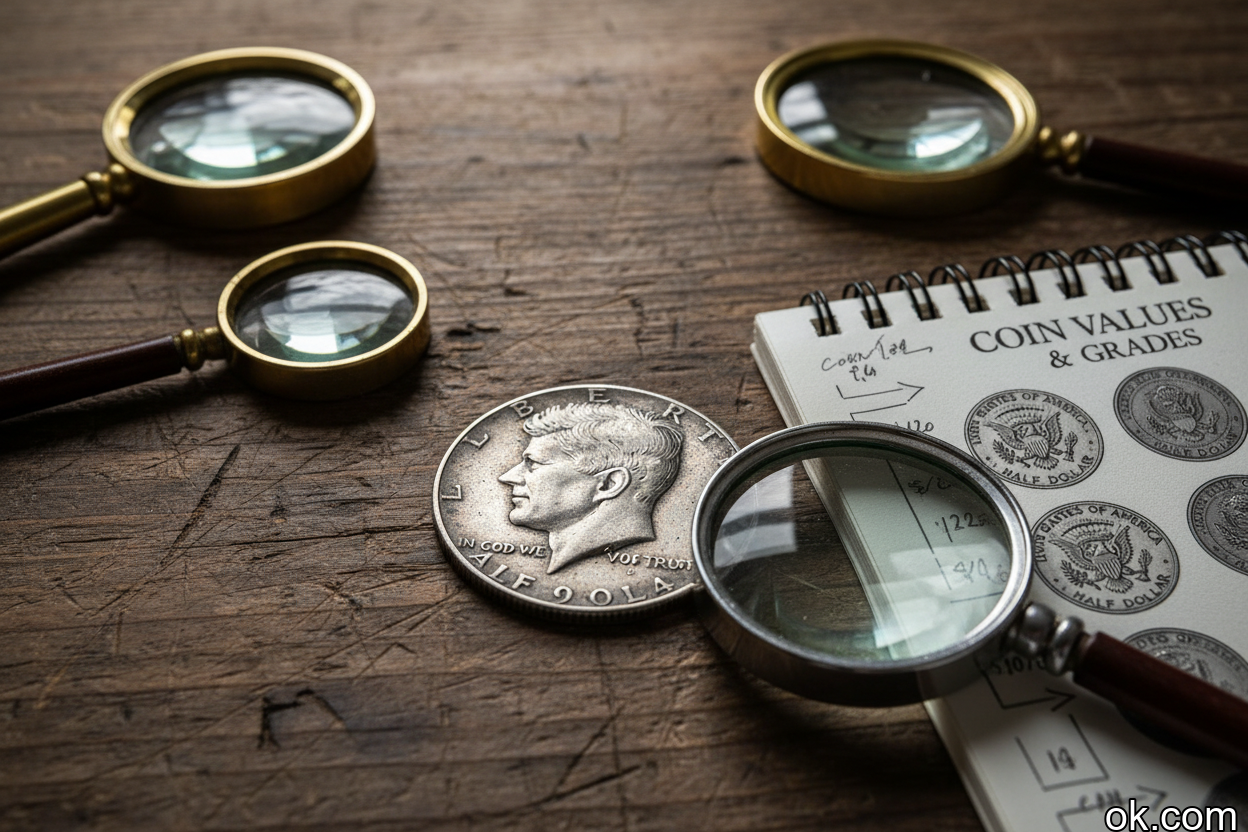
First things first, let's talk about what you’ve got. The 1974 Kennedy half dollar, like many of its era, isn’t made of silver. Bummer, I know. That shining allure of precious metal is usually the first thing that pumps up a coin's value. These coins are primarily composed of copper and nickel. But does that completely negate any possibility of them being worth more than fifty cents? Not necessarily.
Okay, so the obvious answer. A 1974 half dollar is, at minimum, worth 50 cents. You can spend it at the store, use it in a vending machine (if you can find one that takes half dollars these days!), or simply keep it as a piece of pocket change. According to the NGC Price Guide, most circulated 1974 Kennedy Half Dollars are valued between $0.60 and $0.75 as of December 2025. Not exactly a fortune, is it?
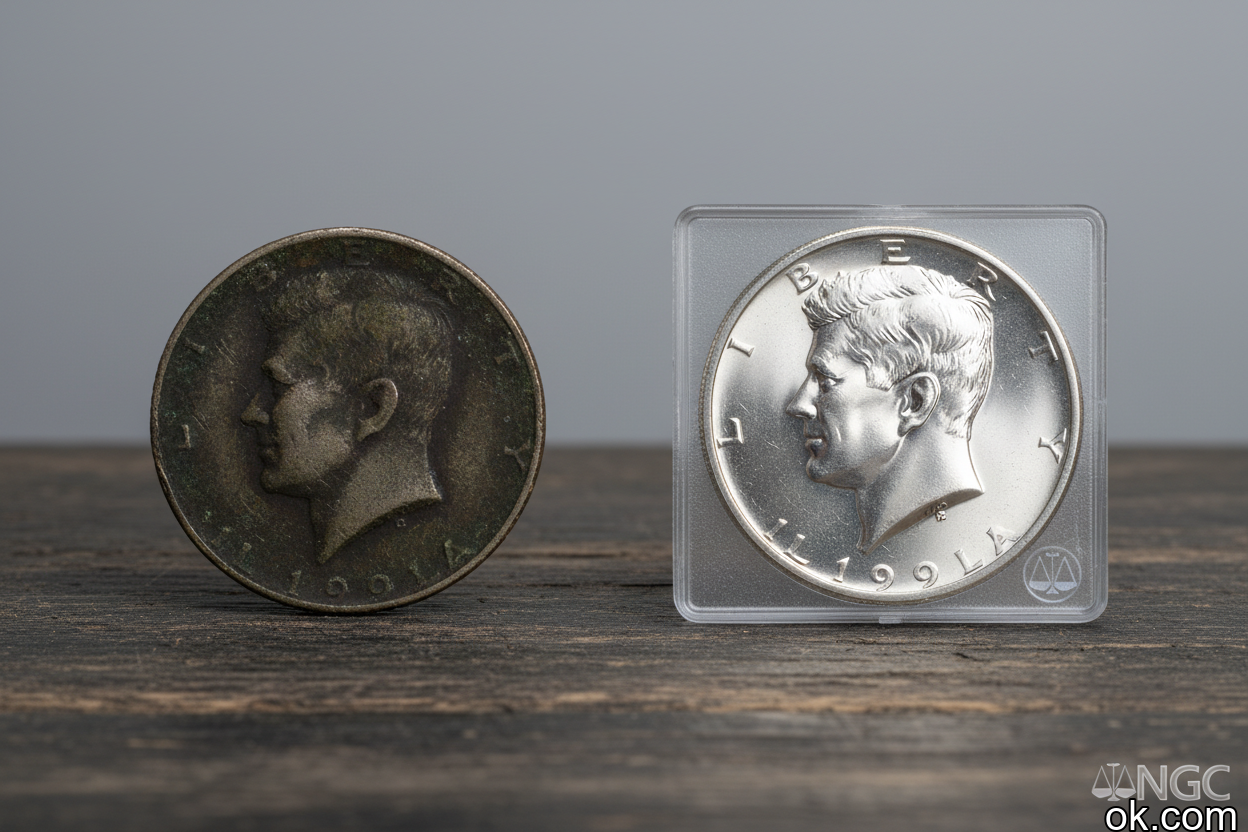
Alright, let's get to the exciting part. While the vast majority of 1974 half dollars are only worth a small amount above their face value, there are a few scenarios where your coin could be a winner.
Condition, condition, condition! It's the mantra of every serious coin collector. A 1974 half dollar in pristine, uncirculated "mint state" condition is going to be worth significantly more than one that's been rattling around in someone's coin purse for decades. What does "mint state" mean? Well, it basically means the coin looks like it just came off the press. No scratches, no wear, and with all its original luster intact. These are harder to find, naturally, because most coins see use. I mean, that's what they're for, right?
This is where things get really interesting. Error coins – those with mistakes made during the minting process – can be quite valuable to collectors. Now, identifying errors requires a keen eye and some knowledge of coin production. Look for things like:
These errors are not the norm, but they do happen. So, break out that magnifying glass, folks!
You'll notice a small letter on most coins, called a mint mark. This tells you where the coin was produced. For 1974 half dollars, you'll typically find a "D" for Denver or an "S" for San Francisco. If your 1974 half dollar doesn't have a mint mark, that simply means it was minted in Philadelphia, and it's not inherently more valuable because of that. In fact, it's completely normal!
Why are some half dollars worth so much more than others? It often boils down to silver content and rarity.
Prior to 1965, US half dollars were made of 90% silver. These coins, like the 1964 half dollar, are always worth a premium because of their silver content. As a reference point, these silver half dollars are typically worth around $12 to $15 a piece due to their silver content, according to some sources. That's a substantial jump from face value!
Sometimes, even non-silver coins can be valuable if they're particularly rare. This could be due to a low mintage number (meaning fewer coins were produced) or a high demand from collectors. So, while the 1974 isn't particularly rare, it's worth understanding the general principles.
So, you think you might have a valuable 1974 half dollar? Here are some resources:
The short answer? Most 1974 half dollars are worth just a little over face value, somewhere between $0.60 and $0.75. However, a pristine, uncirculated coin or one with a significant minting error could be worth considerably more. Keep an eye out for those errors and that perfect mint state.
So, what should you do with your 1974 half dollar? Well, if it's in rough shape, go ahead and spend it. But if it looks like it just came off the press, or if you suspect it might have an error, it's worth doing a little more research. Who knows? You might just have a hidden treasure on your hands. And if nothing else, you've got a cool piece of history to show off!