Browse

Log in / Register
 Share
Share
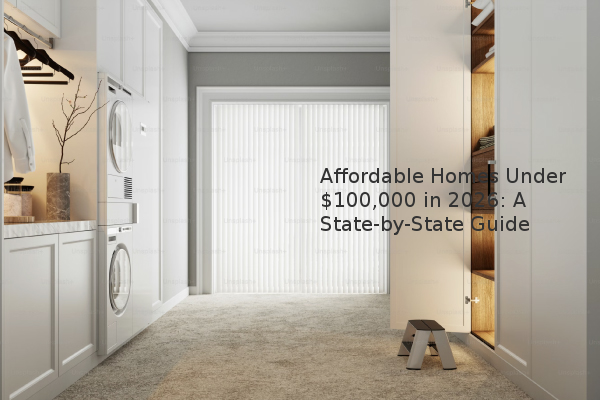
Buying a home for under $100,000 is a realistic goal in 2026 for budget-conscious buyers who know where to look. While these properties often require a keen eye for potential, they present a viable path to homeownership without a massive mortgage. This guide highlights available homes across different states, demonstrating that affordability still exists in the current US real estate market when you focus on specific, often overlooked markets.
Purchasing a home in this price range requires managing expectations. These are typically not large, newly built properties. Based on our experience assessment, buyers should anticipate older homes that may need cosmetic updates or minor repairs. The key is to distinguish between minor issues, like outdated paint or flooring, and major structural problems. A thorough home inspection—a professional examination of a property's condition—is non-negotiable. Focus on the fundamental positives: a sound structure, a functional roof, and updated electrical or plumbing systems. The appeal lies in acquiring a solid foundation in a neighborhood you can afford.
The value of an affordable home is heavily influenced by its location and the price per square foot. A lower price per square foot in a stable or improving area often indicates better long-term value. For instance, a home in Ocala, Florida, is listed at $89,950, translating to $72 per square foot. In contrast, a property in Knoxville, Tennessee, is priced at $89,900 but has a higher per-square-foot cost of $100, suggesting it may be a smaller, more compact, or recently updated dwelling. Evaluating this metric helps you compare properties of different sizes and conditions objectively.
Some homes under $100,000 have already received significant updates, which can save a buyer time and money. A property in York, Pennsylvania, priced at $85,900, features a completely renovated kitchen with high-end finishes. Similarly, a home in Mobile, Alabama, offers new interior paint, fresh carpet, and new tile for $89,900. These turn-key qualities are significant advantages. They reduce the immediate cash outlay for improvements post-purchase, allowing you to move in comfortably. Always verify the quality of the renovations through the inspection report.
Homes with historic charm or unique architectural details offer intangible value that can be a wise investment. In Monticello, Florida, the Cuthbert House, a classic revival build from a prominent local leader, is listed at $99,000. In Lenoir City, Tennessee, an all-brick charmer from 1932 is available for $99,900. These properties possess a character that cannot be replicated in new constructions. While they may come with specific maintenance considerations, their uniqueness can contribute to steady appreciation and a distinctive living experience.
For many buyers, a home's location relative to work, recreation, and daily necessities is as important as the price. A home in Greenville, South Carolina, is highlighted for being a short walk from the famed Swamp Rabbit Trail, a major recreational asset. Another property in Port Huron, Michigan, is noted for being close to shopping, restaurants, schools, and beaches. This proximity to amenities enhances your quality of life and can positively impact the property's resale value down the line, making it a practical choice for daily living.
Purchasing a home under $100,000 in 2026 requires a strategic approach. Focus on the property's structural integrity over cosmetic flaws. Use the price per square foot as a key metric for comparison. Prioritize homes with recent, quality renovations to minimize immediate upgrade costs. Do not underestimate the value of a home's unique character or its proximity to essential amenities. A successful purchase in this market segment hinges on thorough research and a clear understanding of your renovation tolerance and lifestyle needs.