Browse

Log in / Register
 Share

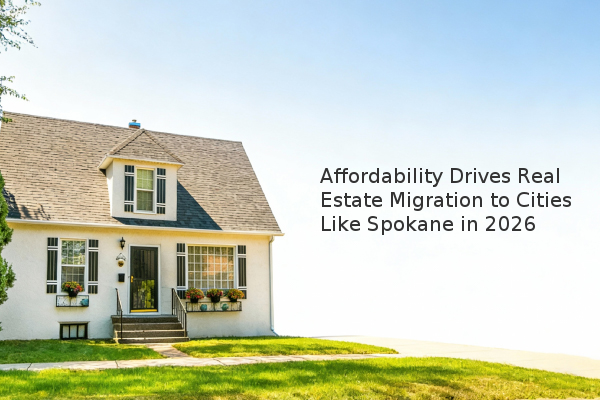
A significant trend in the 2026 housing market is the movement of buyers from expensive metropolitan areas to more affordable cities, with Spokane, Washington, emerging as a prime example. Driven by a substantial affordability gap, this migration pattern highlights a key consideration for both buyers and sellers: understanding the factors that make a location attractive to relocating households. Based on our experience assessment, areas with a median home price significantly lower than the buyer's origin market are seeing the most inbound interest.
The primary driver for this cross-market demand is economic. When the median list price in a target city is over 20% lower than in a buyer's current market, the financial incentive to relocate becomes powerful. This is particularly true for remote workers and those whose professions are in demand across multiple regions. For instance, a buyer from a high-cost city like Seattle can achieve significant equity growth—the increase in a property's value over time—by purchasing a comparable home in Spokane for less, often with a lower overall cost of living. This migration is not limited to permanent moves; it also includes investors and buyers seeking vacation properties in desirable, lower-cost areas.
Current market analysis indicates that cities in the Pacific Northwest and certain Sun Belt regions are attracting the most attention from out-of-state buyers. The common denominator among these destinations is a combination of relative affordability and quality of life amenities. While precise rankings fluctuate, the trend consistently shows that metros adjacent to, but significantly less expensive than, major tech and economic hubs receive the highest volume of inbound searches. This suggests that proximity to job opportunities, even if not the primary residence, remains a factor for many buyers considering a move.
An influx of buyers with larger housing budgets from more expensive areas can rapidly alter a local real estate landscape. A key impact is on property appreciation, which is the rate at which home values increase. As demand outstrips supply, home prices in the destination city can rise, potentially affecting affordability for long-term residents. This dynamic can lead to a competitive market with quicker sales and multiple-offer scenarios. Sellers in these markets may find themselves in an advantageous position, while buyers need to be prepared for a fast-paced purchasing process.
For buyers considering a move to a more affordable city, thorough research is essential. It is important to look beyond the sale price and investigate property taxes, homeowners insurance, and long-term market stability. For sellers in markets experiencing high inbound demand, this trend can present an optimal time to list. However, pricing a home correctly remains critical; an overpriced home can still stagnate, even in a hot market. Understanding the profile of the typical inbound buyer—where they are moving from and what they are looking for—can help sellers stage and market their property effectively.
The migration to more affordable cities is a defining feature of the current housing landscape. For potential movers, the financial benefits are clear, but they must be weighed against factors like employment stability and lifestyle changes. For those in target markets, this trend represents a significant shift in local dynamics, offering opportunities and challenges depending on whether one is buying or selling. The key to navigating this environment is localized, data-informed decision-making.