Browse

Log in / Register
 Share
Share
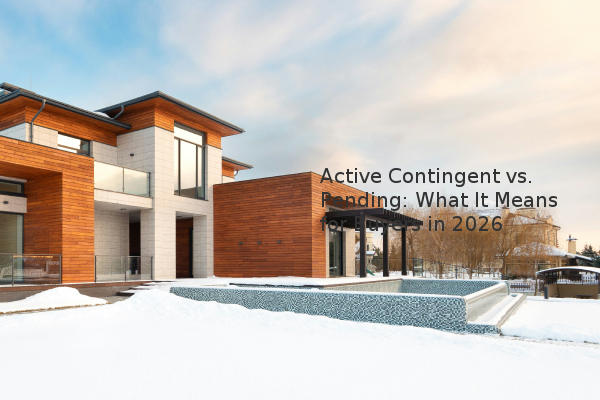
An "Active Contingent" status on a real estate listing means a seller has accepted an offer, but the sale is not final because certain conditions, or contingencies, must be met. While you can still submit a backup offer, the primary deal is likely to proceed unless those contingencies fail. Understanding the difference between this status and "Pending" is critical for making a smart, competitive offer in today's market.
When a property is listed as "Active Contingent," it signifies that the seller has accepted a buyer's offer, but the final sale is dependent on specific criteria being satisfied. A contingency is a clause in a real estate contract that outlines a condition that must be met for the deal to move forward. If the contingency is not fulfilled, the buyer can typically back out without penalty and reclaim their earnest money deposit (a good-faith deposit made to show the buyer is serious about the purchase).
The most common contingencies include:
The main distinction lies in the resolution of these contractual conditions. The following table clarifies the key differences in listing statuses:
| Status | Meaning | Buyer's Opportunity Level |
|---|---|---|
| Active Contingent | An offer is accepted, but key contingencies (inspection, financing, etc.) are still active. | Moderate. The deal is vulnerable if contingencies fail. |
| Pending | All contingencies have been satisfied, and the sale is awaiting closing and final paperwork. | Low. The sale is almost certain to be finalized. |
| Short Sale Contingent | The offer is contingent on the seller's lender approving a sale for less than the owed mortgage balance. | High uncertainty; the process is long and the lender may reject the offer. |
A "Pending" status indicates that all the hurdles have been cleared, and the transaction is in its final stages. A "Short Sale Contingent" status is a specific and often complex situation where the seller's lender must approve the deal.
Yes, you can and often should submit a backup offer on an active contingent property. While the first buyer has the primary position, your offer serves as a powerful safety net for the seller. Based on our experience assessment, if an issue arises during the first buyer's contingency period—such as a failed inspection or loan denial—a seller with a strong backup offer may be more inclined to terminate the initial contract and move forward with you.
The key is to make your backup offer as attractive and hassle-free as possible to encourage the seller to consider you as a viable alternative.
To increase the likelihood that a seller will take your backup offer seriously, you need to present yourself as a committed and low-risk buyer. Here are several strategies:
In conclusion, an "Active Contingent" status is not a closed door but an opportunity for strategic buyers. By understanding the risks involved and presenting a strong, clean backup offer, you position yourself to potentially secure the property if the initial deal falls through. The most critical steps are working with an experienced agent and ensuring your financial readiness to act quickly if your backup offer is promoted to the primary position.