Browse

Log in / Register
 Share

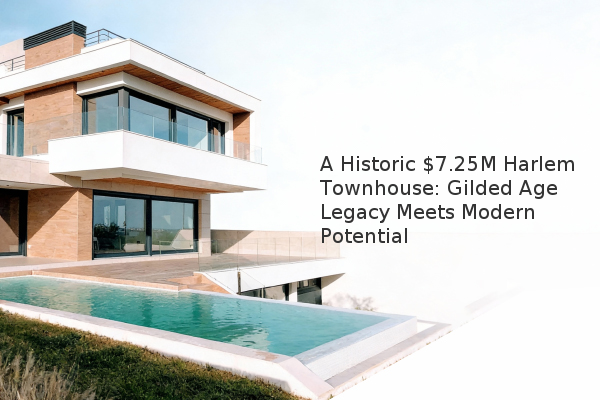
A rare piece of American industrial history is on the market: a meticulously restored 1890 Harlem townhouse built by Arm & Hammer founder John Dwight. Priced at $7.25 million, this six-bedroom, five-bathroom property offers a unique opportunity for a buyer to complete its modernization while preserving its Gilded Age legacy. The home’s most significant features include a prime corner lot with 52 oversized windows flooding the space with natural light, and a Lucy G. Moses Preservation Award-winning restoration that returned the floor plan to its original state.
Built for baking soda magnate John Dwight, this townhouse is an example of neo-Renaissance Revival Style architecture, a design movement popular during the late 19th century that drew inspiration from Italian Renaissance palaces. The property’s significance is twofold: its connection to a iconic American brand and its architectural pedigree, having been designed by architect Frank Hill Smith. The current owners undertook a 15-year restoration, hiring architect Samuel G. White—great-grandson of the famed Stanford White—to meticulously return the mechanical systems and room layouts to their 1890 specifications, an effort that earned them the prestigious preservation award in 2022.
The home’s nearly 10,000 square feet of living space is exceptional for a New York City townhouse, largely due to its corner lot placement. Unlike typical brownstones with windows only at the front and rear, this property has exposures on three sides. This creates an unusually bright interior with nature views of adjacent Morris Park from nearly every room. The original floor plan includes grand features like a double-door entrance, multiple fireplaces, two staircases, and space for a library. The layout also includes two kitchens and two laundry rooms, offering flexibility for modern living.
Based on our experience assessment, the property requires further investment to meet modern technological standards. The most notable updates needed are the installation of a central air conditioning system and repairs to the existing elevator. While the home functions well, the current systems are not highly sophisticated. The listing agent notes that interested buyers, often connected to nearby Columbia University, are enthusiastic about the preservation but plan to complete these specific renovations. The good news is that the structurally significant and historically sensitive work has already been completed, allowing a new owner to focus on these discrete modern comforts.
The target buyer for this home is likely a wealthy individual with a creative vision for blending historical preservation with personalized modernization. This is not a turn-key property but a project for a specific purchaser who values architectural integrity and has the resources to customize it. The agent suggests the buyer will appreciate the "amazing architecture" of the Harlem neighborhood and the unique opportunity to design a future home within a landmarked shell. The potential for a 10,000-book library, a wine cellar, and an outdoor terrace adds to the appeal for a buyer seeking a one-of-a-kind New York City residence.
Conclusion: Purchasing this property represents a commitment to stewardship of a significant historical artifact. The key takeaways for a potential buyer are: the structural and historical restoration is complete, the corner lot provides unparalleled light and space, and the necessary updates (AC, elevator) are well-defined and manageable for a buyer with the appropriate budget and vision.