Browse

Log in / Register
 Share

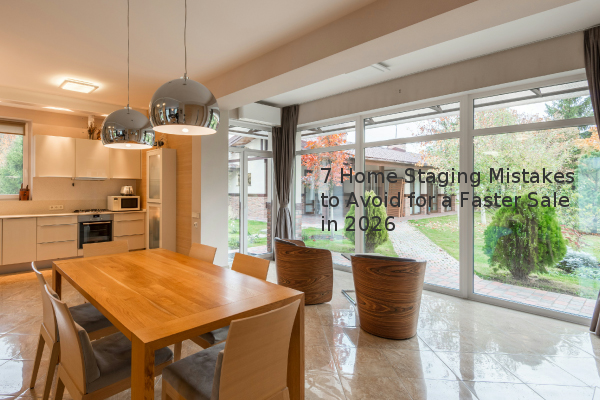
Effective home staging can significantly reduce your property's time on the market and increase its final sale price. However, common missteps can undermine these benefits. Based on our experience assessment, avoiding these seven critical errors is essential for presenting your home in its best light to potential buyers in 2026. The core principle is to create a neutral, inviting canvas that allows buyers to envision their own lives in the space, not to showcase your personal design style.
What is the biggest mistake in home staging? The most significant error is overdesigning the space. The goal of home staging—the process of preparing a private residence for sale in the real estate marketplace—is to highlight the property's potential, not to overwhelm buyers with a strong decorative theme. As Justin M. Riordan, founder of Spade and Archer Design Agency, notes, "Home staging is like being a backup singer to the house, which is the star." The furnishings and decor should complement the architecture and flow of the rooms without becoming the main attraction. Over-accessorizing or using loud, trendy pieces can distract buyers from the home's core features, such as square footage, natural light, and layout.
Why should you avoid fake decor when staging? Using artificial items is a quick way to make a home feel sterile and uninviting. Fake plants, flowers, and food can subconsciously signal to buyers that the home lacks authenticity. "Every time buyers see a fake item they are reminded that this is not real, this is not achievable, and this is not their new home," explains Riordan. Instead, incorporate real elements like a fresh vase of flowers, a bowl of real fruit, or high-quality, natural fiber textiles. These touches add warmth and life, making the space feel cared for and genuinely livable.
How does furniture scale impact a buyer's perception? Using furniture that is disproportionate to the room is a common but costly mistake. Contrary to intuition, placing small, lightweight furniture in a large room to make it feel bigger can have the opposite effect, making the space feel dwarfed and awkward. Furniture should match the scale and proportion of each room. A massive great room, for instance, requires a substantial sofa and appropriately sized coffee table to help buyers visualize how the area can accommodate their own large furnishings and entertaining needs. Similarly, decor accessories should be sized correctly; home stager Tori Toth advises, “No piece should be smaller than a softball,” to avoid visual clutter.
Should every room have the same design style? Creating a single aesthetic throughout the entire home can limit its appeal. Buyers have diverse tastes and need to see that their existing belongings will fit. An eclectic mix of traditional, timeless pieces demonstrates versatility. While a cohesive flow is important, each room can have its own subtle color story. This approach prevents the home from feeling like a monotonous showroom and instead presents it as a dynamic, adaptable space. Light-colored sofas, clean-lined tables, and neutral foundational pieces provide a blank slate that appeals to the broadest audience.
Does closing doors during a showing matter? Yes, this is a critical logistical detail. Keeping all interior doors open—including those to closets, pantries, and secondary rooms—is essential. A closed door can cause a buyer to miss valuable square footage entirely, perhaps assuming a door leads to a simple closet rather than a staircase or a spacious home office. Before every showing or open house, conduct a final walk-through to ensure every door is open, creating a seamless and exploratory flow that encourages buyers to see every part of the property.
Is an all-beige color scheme the safest choice? While neutral walls are generally recommended, a completely beige and ivory palette can cause your home to blend in with others buyers have seen. Strategic pops of color in one or two accent rooms can create memorable moments. For example, a soft blue home office or a guest bedroom with green accents can serve as a visual anchor, helping your property stand out in a buyer's memory after a long day of viewings. The key is to use color subtly and tastefully to enhance, not dominate, the room.
What practical advice should sellers follow? To maximize your home's appeal, focus on these actionable steps:
Ultimately, successful home staging is about creating an emotional connection. By avoiding these common mistakes, you present a property that feels both move-in ready and full of potential, compelling buyers to make an offer.