Browse

Log in / Register
 Share

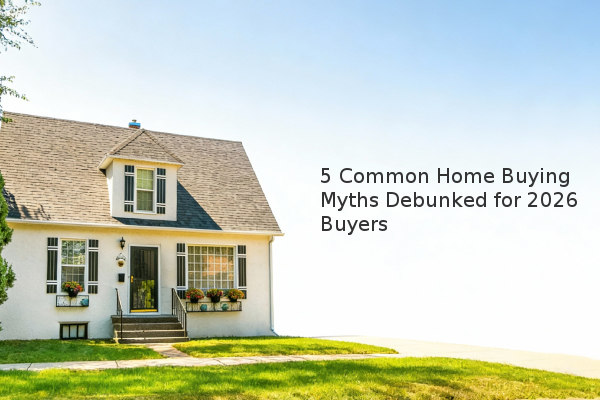
Buying a home involves navigating a sea of advice, but not all of it holds up in today's market. Based on our experience assessment, several widely accepted home-buying tips can actually lead buyers astray, resulting in financial strain or purchasing the wrong property. The most critical takeaway is that real estate is hyper-local, and advice must be tailored to your specific market, budget, and lifestyle. The five most common myths to question involve fixer-uppers, distressed properties, location strategies, agent selection, and pricing metrics.
Is a Fixer-Upper Really a Shortcut to Savings?
While popular media romanticizes the transformation of a dilapidated house, the reality is far more complex. A fixer-upper, a property requiring significant repairs, is not a guaranteed bargain. To genuinely save money, you typically need to be able and willing to perform a substantial amount of the work yourself. If you lack renovation knowledge, the project becomes significantly riskier. Before purchasing, it's crucial to get a professional inspection with detailed repair estimates from a licensed remodeling contractor. Furthermore, you must factor in the holding costs—paying a mortgage, property taxes, and insurance while the home is uninhabitable. For the inexperienced, the line between a fixer-upper and a financial money pit is perilously thin.
Are Foreclosures and Short Sales Automatic Bargains?
Distressed properties, including foreclosures (homes seized by a lender) and short sales (sales for less than the mortgage balance), are often not the deals they appear to be. In the current market, financial institutions aim to recoup as much value as possible. The purchase process can be lengthy and complex, with limited room for negotiation on the price or condition. With foreclosures sold at auction, you are buying the property "as-is," often without the opportunity for a prior interior inspection. This presents a substantial, and often unacceptable, risk regardless of the attractive price tag. For buyers using government-backed loans like FHA loans, which have strict property condition requirements, these properties frequently fail to qualify.
Should You Always Buy the Worst House on the Best Block?
This strategy suggests that the value of surrounding homes will elevate your property's worth. However, this approach prioritizes future resale over your present quality of life. Most buyers are not investors; they are people seeking a home to live in. A house that is too small, has a problematic layout, or lacks essential features will not become more livable simply because it's on a desirable street. It is often a better financial and personal decision to find the right house in a good, yet more affordable, neighborhood. While you can change your home through renovations, you cannot easily change its fundamental location or size.
Do You Absolutely Need a 'Neighborhood Expert' Agent?
While an agent familiar with your target area is beneficial, the term "neighborhood expert" can be misleading. An agent who focuses too narrowly on one small area might overlook better-value opportunities in adjacent communities. A more effective measure of an agent's expertise is their overall transaction volume and experience helping buyers with similar needs and budgets. Beware of overvaluing a specific geographic designation; a skilled agent should demonstrate a broad understanding of market trends and possess strong negotiation skills, rather than just hyper-localized sales.
Is Price Per Square Foot the Ultimate Comparison Tool?
The price per square foot metric, calculated by dividing the sale price by the home's interior square footage, is a useful benchmark but can be misleading if used in isolation. This figure does not account for critical value factors such as the size of the yard, the presence of a garage or unfinished basement, the number of bathrooms, or the property's overall condition. Two homes with identical price-per-square-foot values can have vastly different actual values based on these other attributes. Price per square foot is just one part of a comprehensive property evaluation.
The most important principle in home buying is that no single piece of advice is universal. Strategies that work in one city or neighborhood may be ineffective in another. Your best safeguard is to work with a real estate agent you trust and feel comfortable questioning thoroughly. A professional can provide data-driven insights specific to your 2026 home search.