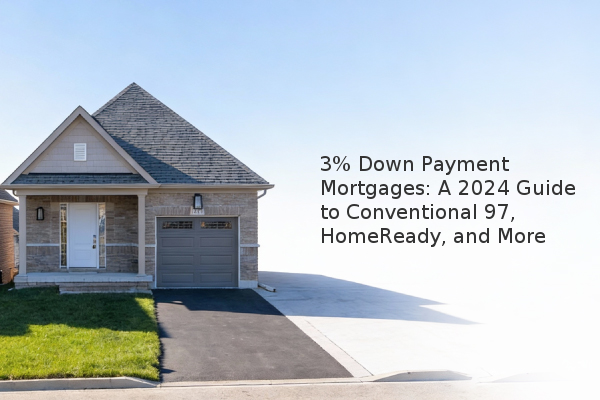
For many aspiring homeowners, saving a 20% down payment is the single biggest barrier to buying a house. However, a 20% down payment is not a requirement. Several low-down-payment mortgage programs allow qualified buyers to purchase a home with just 3% down. This guide outlines four prominent 3% down payment options—Conventional 97, HomeReady, Affordable Loan Solution, and yourFirst Mortgage—detailing their unique features, eligibility requirements, and key considerations to help you make an informed decision.
What Are the Main 3% Down Mortgage Options?
The most accessible low-down-payment loans are conventional loans, meaning they are not backed by a government agency like the FHA, VA, or USDA. The key options include:
- Conventional 97 Mortgage: A widely available program for first-time home buyers.
- HomeReady Mortgage: A flexible option from Fannie Mae with income-based eligibility.
- Affordable Loan Solution Mortgage: A Bank of America product that notably waives mortgage insurance.
- yourFirst Mortgage: A Wells Fargo program offering flexible credit guidelines.
Each program has specific rules regarding property type, borrower income, and the source of down payment funds. According to the National Association of Realtors, nearly 30% of first-time buyers put down less than 5%, making these programs a critical part of the market. Eligibility for any mortgage depends on your credit score, debt-to-income ratio, and financial history, so it's essential to consult a licensed mortgage lender for personalized advice.
How Does the Conventional 97 Mortgage Work?
The Conventional 97 mortgage is designed specifically for first-time home buyers, defined as individuals who have not owned a home in the past three years. It requires a 3% down payment and is available for loan amounts up to the conforming loan limits set by the Federal Housing Finance Agency (FHFA), which was $766,550 in most areas for 2024.
Key features of this program include:
- Property Type: The home must be a single-unit, owner-occupied primary residence (including a condominium). It cannot be used for a second home, investment property, or multi-unit building (2-4 units).
- Down Payment: Funds can come from your savings or be gifted by a family member.
- Loan Terms: Typically offered as a 30-year fixed-rate mortgage.
- Mortgage Insurance: Private Mortgage Insurance (PMI) is required. PMI is an additional fee that protects the lender if you default on the loan. This cost is added to your monthly payment until you build sufficient equity.
What Makes the HomeReady Mortgage Different?
The HomeReady mortgage program, backed by Fannie Mae, stands out for its flexible qualification criteria. While not limited to first-time buyers, it is geared toward low- to moderate-income households.
Notable advantages of the HomeReady loan include:
- Flexible Household Income: Lenders can consider the income of all individuals living in the household, even if they are not on the mortgage, to help qualify for the loan.
- Rental Income: You can use potential rental income from a boarder or tenant to qualify, which can be particularly helpful for purchasing a property with an accessory dwelling unit.
- Loan Options: Offers more variety than the Conventional 97, including 10-, 15-, 20-, and 30-year fixed-rate terms, as well as adjustable-rate mortgages (ARMs).
- Lower Costs: While PMI is required, it is generally offered at a lower cost than on a Conventional 97 loan. Interest rates are also often more competitive.
This program has income limits, typically capped at 80% of the Area Median Income (AMI), and the property must be in an eligible census tract.
Is There a 3% Down Mortgage Without PMI?
The Affordable Loan Solution (ALS) mortgage, offered by Bank of America in partnership with Freddie Mac, is a unique program because it requires no monthly mortgage insurance. This can result in significant monthly savings.
Important details for the ALS mortgage are:
- No Mortgage Insurance: This is the program's most distinguishing feature, eliminating a recurring monthly cost.
- Income Limits: Borrower income cannot exceed 100% of the median income for the area, as determined by the U.S. Department of Housing and Urban Development (HUD).
- Flexible Credit: Borrowers with limited traditional credit history (like credit cards or auto loans) may qualify using non-traditional credit sources, such as consistent utility, phone, or rent payments.
- Property Requirements: The home must be a single-unit primary residence (including condos).
What Are the Benefits of the yourFirst Mortgage?
Wells Fargo's yourFirst Mortgage is tailored for first-time buyers, incorporating several flexible features to help with qualification.
Key benefits of this program include:
- Down Payment Sources: Allows funds from down payment assistance programs in addition to personal savings and gift funds.
- Interest Rate Reduction: Borrowers who complete a homebuyer education course with a HUD-approved counselor may qualify for a lower interest rate if their down payment is less than 10%.
- Flexible Income and Credit: Similar to HomeReady, it allows the use of household income and potential rental income. It also accepts non-traditional credit history documentation.
- PMI Conditions: PMI is required but can be canceled once the loan-to-value (LTV) ratio reaches 80%, meaning you have 20% equity in your home.
The best way to determine your eligibility for these programs is to speak with a licensed mortgage professional. They can assess your financial profile, explain the latest guidelines, and help you compare the true cost of each loan option based on current rates and fees.


 Share
Share