Browse

Log in / Register
 Share
Share
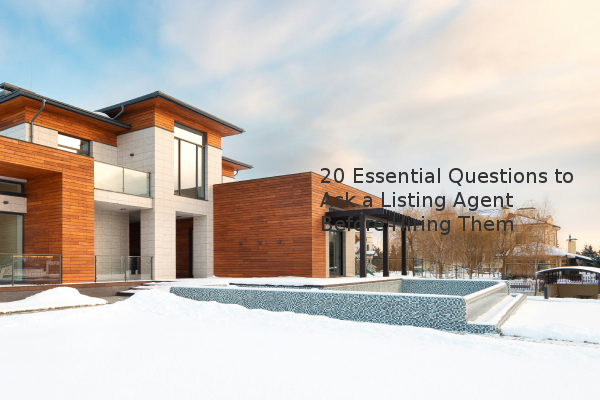
Hiring the right listing agent is the single most important decision a home seller makes. According to a 2024 industry survey, 93% of sellers used an agent, with 69% citing the need to find buyers as the primary reason. To ensure a successful partnership, you must interview potential agents with a strategic set of questions. This guide outlines the 20 critical questions that will help you identify a skilled, communicative, and results-driven professional, ultimately leading to a smoother and more profitable sale.
What specific services are included in your listing package? Not all real estate agents offer identical service levels. A comprehensive listing agreement should detail all deliverables. Standard services typically include:
Be wary of limited-service or flat-fee models. Clarify exactly what support you'll receive beyond the basic MLS entry to avoid unexpected responsibilities.
Is your real estate commission negotiable? Commission fees, typically ranging from 3% to 6% of the sale price, are negotiable. Data shows 51% of sellers successfully negotiated a lower rate. Before signing a listing agreement, agree on the commission structure. To strengthen your negotiation position, consider:
How familiar are you with my specific neighborhood? Real estate is hyper-local. An agent with deep neighborhood expertise can effectively market your home's location. Ask:
An agent familiar with area amenities, school districts, and market trends can accurately position your home against the competition.
What are your typical response times, and who is my main point of contact? Clear communication is vital. Establish expectations for response times to calls and texts, including evenings and weekends. Confirm whether you will communicate directly with the lead agent or a team member. Consistency prevents miscommunication and keeps the sale process on track.
What is your track record for the past year? Request concrete data to assess an agent's recent performance. Key metrics include:
This data indicates their skill in pricing, marketing, and negotiation.
Do you have a network of potential buyers for a home like mine? A well-connected agent may have a pipeline of qualified buyers. Even if a specific buyer isn't lined up, they should have a proven strategy—using social media, broker networks, or email lists—to generate immediate interest.
How do you determine the right listing price for my home? The listing price must be based on evidence, not opinion. Your agent should provide a detailed Comparative Market Analysis (CMA) that evaluates:
Be cautious of agents who suggest an unrealistically high price to win your listing, as overpricing often leads to extended market time and price reductions.
What pre-listing home improvements do you recommend? A 2024 survey found 72% of sellers completed at least one improvement project before listing. A good agent will distinguish between high-return projects (like fresh paint) and unnecessary cosmetic updates, providing a clear Return on Investment (ROI) assessment.
What are the key terms of the listing agreement? The listing agreement is a binding contract. Understand its length (e.g., 30, 60, or 90 days) and, crucially, the cancellation clause. Ensure the contract includes reasonable exit options if the partnership isn't working.
What is your comprehensive marketing plan? Marketing should extend beyond the MLS. A robust plan includes:
Who will be present during showings and open houses? Confirm who will host showings and open houses—the agent, a team member, or a buyer's agent via lockbox. This ensures your property is presented professionally and securely.
How will you handle multiple offers? In competitive markets, an agent's strategy for managing multiple offers is critical. They should explain their process for evaluating offers based on price, contingencies, and buyer financing strength, not just the highest number.
What is your plan if the home doesn't sell quickly? A proactive agent will schedule regular reviews of market feedback and be prepared to adjust the pricing or marketing strategy if the home isn't attracting offers within the expected timeframe.
Can you provide references from recent clients? Speaking with past clients offers invaluable insight into an agent's communication and performance. Also, check independent online reviews for a well-rounded perspective.
By asking these targeted questions, you move beyond a simple interview to a thorough vetting process. The right agent will provide clear, confident answers backed by data and a solid plan. This due diligence is your best strategy for a successful and efficient home sale.