Browse

Log in / Register
 Share

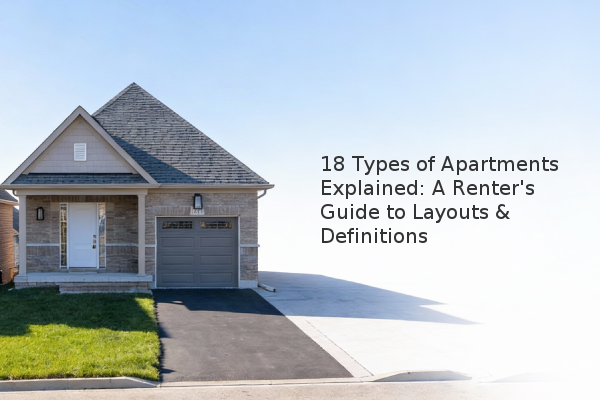
Understanding the different types of apartments is the first critical step in finding a rental that fits your lifestyle and budget. Based on our experience assessment, the most common apartment type in the U.S. is the two-bedroom unit, but your ideal choice depends on your need for space, privacy, and specific amenities. This guide clearly defines 18 apartment types, from compact studios to expansive townhouses, to help you make an informed decision.
A studio apartment is a single, open room that combines the living, sleeping, and sometimes dining areas, with a separate, enclosed bathroom. The kitchen may be a full-sized kitchen or a smaller kitchenette. This layout is defined by its efficient use of space, making it one of the most affordable options on the market.
An alcove studio features the same open-concept foundation as a standard studio but includes a distinct nook or alcove, often in an L-shape. This alcove provides a semi-private area for a bed, offering more definition than a true studio without the cost of a one-bedroom apartment.
A convertible apartment (or flex apartment) has an open layout similar to a studio but is large enough to be partitioned. Tenants can use room dividers or temporary walls to create an additional room, such as a second sleeping area or a home office. It's important to check your lease agreement, as some landlords may have restrictions on modifications.
A loft is characterized by its high ceilings, large windows, and expansive, open floor plan. These units are often conversions of old industrial or commercial buildings, offering a unique, spacious feel. The rent for a loft is typically higher due to the unique architecture and square footage.
A micro-apartment is an ultra-compact unit, typically under 400 square feet. To maximize functionality, these apartments often include built-in, space-saving furniture and innovative storage solutions. They are most prevalent in high-density urban areas where space is at a premium.
A junior one-bedroom apartment bridges the gap between a studio and a one-bedroom. It features a partial wall, archway, or separated area that designates a sleeping space, but it lacks a fully enclosed door. The walls often do not extend to the ceiling, limiting sound privacy.
A one-bedroom apartment has a fully enclosed bedroom, separate living room, and kitchen. A two-bedroom apartment, the most commonly rented type in the U.S., offers more space, suitable for roommates, small families, or those needing a home office. Larger units command higher rent. The table below outlines the key differences.
| Apartment Type | Typical Size Range | Ideal For |
|---|---|---|
| One-Bedroom | 600 - 800 sq ft | Individuals, couples wanting dedicated rooms |
| Two-Bedroom | 1,000 - 1,499 sq ft | Roommates, small families, remote workers |
| Three-Bedroom | 1,200+ sq ft | Larger families, multiple roommates |
A garden-level apartment is situated on the ground floor, sometimes slightly below street level, and typically has direct access to a patio or yard. A basement apartment is located primarily or entirely underground, which usually results in fewer and smaller windows and lower rental prices.
A railroad apartment has rooms arranged in a straight line, one after the other, without a central hallway. To get to the back room, you must walk through every preceding room. This layout, common in older buildings, can limit privacy and natural light in the interior rooms.
A duplex is a single building containing two separate living units, stacked vertically or placed side-by-side. A triplex contains three separate units. Each unit is self-contained with its own entrance, kitchen, and bathroom. These offer a more house-like feel than a large apartment complex.
A penthouse is a luxury apartment on the top floor of a high-rise building. These units are known for high-end finishes, premium appliances, exceptional views, and a premium price tag that reflects their status and amenities.
A walk-up apartment is in a building without an elevator, typically four stories or fewer. These are often found in older, more classic buildings and can be more affordable. A high-rise apartment is in a taller building with elevator access and often features modern amenities like a gym, concierge, or rooftop terrace.
A co-living space provides a private bedroom within a larger unit that has shared common areas, such as kitchens, living rooms, and sometimes bathrooms. This model is more structured than a traditional roommate situation and often includes utilities and cleaning services in the rent.
A townhouse is a multi-floor, single-family home that shares one or more walls with adjacent properties. Unlike a triplex where you rent one floor, a townhouse rental gives you occupancy of multiple levels. They often feature a basement, a main floor, and an upper floor.
When touring apartments, always request a floor plan and clarify any ambiguous terms in the listing. Understanding the exact layout and definition will prevent surprises and ensure you find a home that truly meets your needs.